Insects (Insekten): Worksheets and teaching materials for English lessons
Worksheets, exercises and educational games on the topic of insects for primary school English lessons. The materials are particularly suitable for grades 3 and 4 and help students learn, practice and reinforce their English vocabulary related to insects, animals and typical characteristics in a fun and engaging way. Ideal for classroom use, independent work, station learning or cover lessons – available as ready-to-use PDFs and PowerPoint presentations.

Filter
38 products




Teaching materials on the topic of Insects
Bees, butterflies, beetles or ants – insects are encountered by children almost everywhere, especially in spring and summer. This makes it easy to connect the topic with their own observations from the garden, forest or schoolyard and provides an engaging introduction to English lessons.
The materials are intended for primary and lower secondary school and can be used in Grades 1 to 6 depending on their scope and difficulty level. Worksheets, picture cards, flashcards and educational games help children to learn important insects in English and use the new vocabulary with confidence.
Ways to use the materials in class
To start, well-known insects can be collected or searched for in a picture. Which animals do the children already know? Which ones might they have seen outside? The appropriate English terms are then introduced and matched to the pictures.
The topic can also be easily combined with small observation tasks. The children can sort animals by colour, size or distinctive features, look at wings and legs or think about where the different species live. This directly connects English words with concrete ideas from nature.
Ideal for:
- Pair work
- Group work
- Station learning
- Independent work
- Weekly planning
- Remedial lessons
- Cover lessons
- Review phases
Learning objectives and skills promoted
The children learn about various insects and their features in English. They recognise the animals in pictures, match them with the appropriate terms and gradually use the words when speaking, reading and writing.
The vocabulary includes, for example, insect, ant, bee, butterfly, beetle, ladybird, fly, mosquito, grasshopper, dragonfly and caterpillar. Depending on their level, words such as wings, legs, small, colourful, fast or slow can also be added.
In addition to the names of the animals, pronunciation, listening and reading comprehension, as well as basic writing skills, are practised. The children can name individual insects, describe their features or identify simple differences between different animals.
Design and structure of the materials
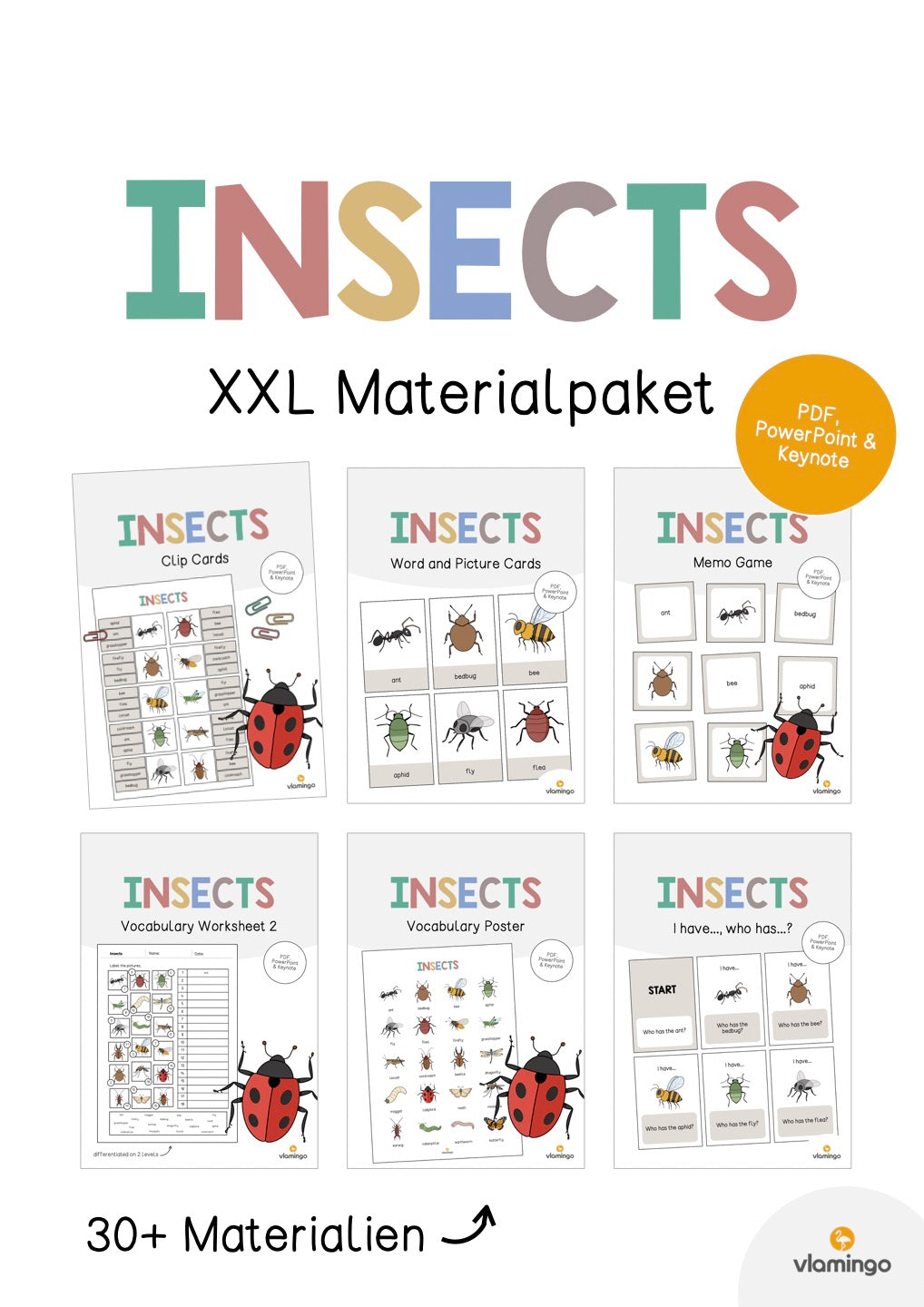
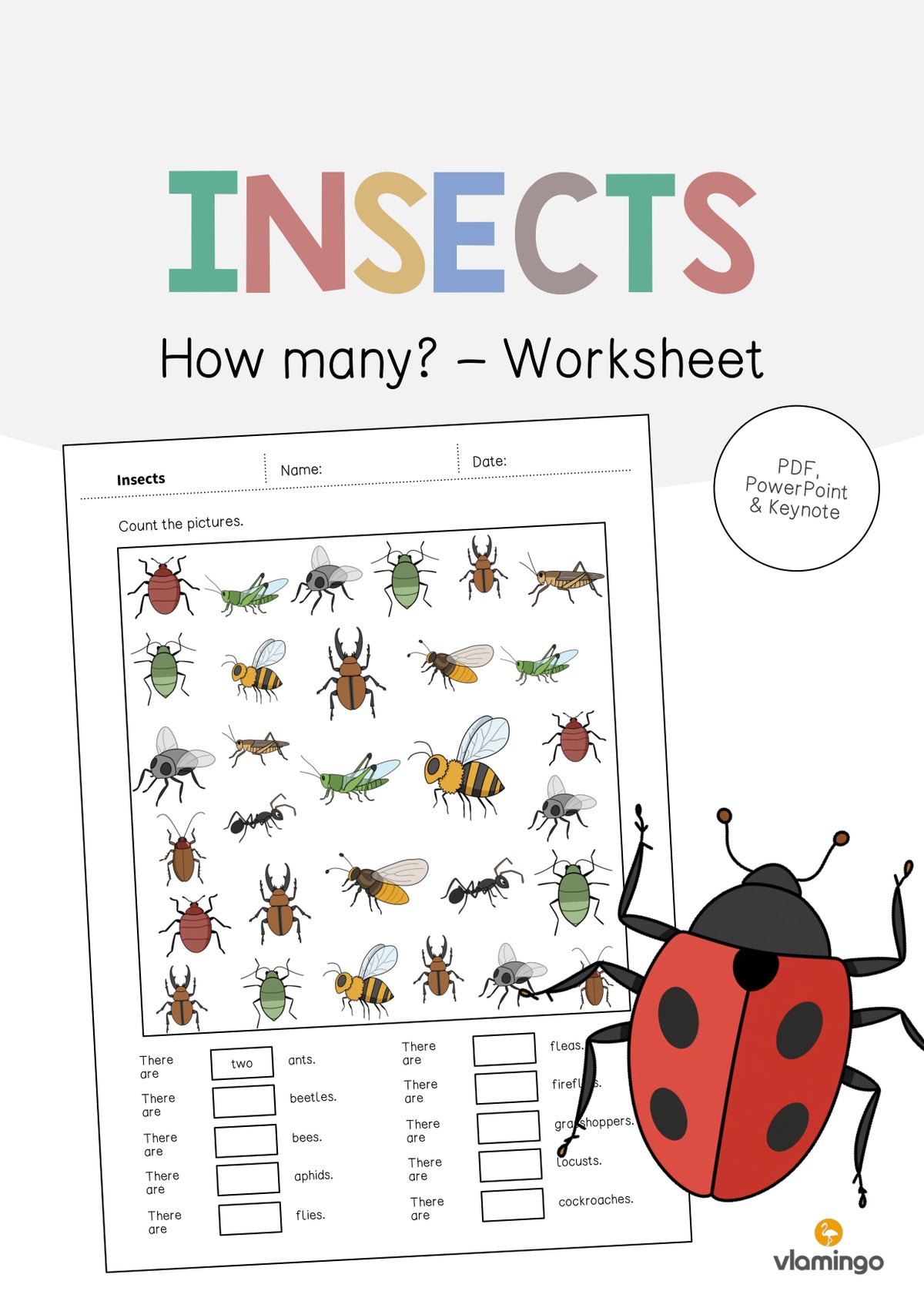
There are various materials available on the topic of Insects. These include worksheets, flashcards, picture cards, word-picture cards, dominoes, bingo and memory games.
Picture cards and flashcards are ideal for introducing the vocabulary together or for a short review. On worksheets and in matching tasks, the children read and write the new words or match them with the appropriate pictures. Dominoes, bingo and memory games add extra playful practice phases to the lessons.
Depending on the material, individual insects, body features, colours or habitats are the focus. This means that specific areas can be targeted or several materials can be combined into a larger unit around Insects in English lessons.
File formats
- PowerPoint
The materials are available for download as PDF and PowerPoint files. Once printed, they can be used directly in class. Editable PowerPoint files can be adapted to the desired vocabulary if needed.
Didactic and methodological tips
Insects are particularly well suited for English lessons that combine language with nature observations. Large pictures make typical features clearly visible, but it becomes even more exciting when the children can look out for bees, butterflies or beetles themselves outside.
The topic of Insects can be easily combined with Spring, Summer, Garden, Forest, Animals, Colours or Numbers. For example, colours can be described, legs counted or animals matched to specific habitats. The difference between insects and spiders can also be addressed in an age-appropriate way.
Differentiation
To start, a few well-known animals such as ant, bee, butterfly or ladybird are sufficient. Pictures help children quickly connect the English terms with the right animal.
Children with more language experience can learn about additional species, describe body features or formulate short sentences. While some only match words and pictures, others can already explain what an insect looks like or how two animals differ.